CONCEPTUAL | PRODUCT DESIGN
DESIGNING A HOME SHARING EXPERIENCE
THE OVERVIEW:
One of the most exciting moments in a person’s life is signing the contract for their first home. This can quickly become one of the scariest parts... the perpetual mortgage payment.
HomeFinder understood this concern and want to provide a service that connects already existing homeowners to roommates, who are like-minded, verified partners in the mortgage-paying process. We were tasked with designing this new program with the stipulation that it would live within its current website.
Together with a team of three, we created an elevated digital experience called HomeSharing that facilitates the connection between homeowners and potential roommates to safely achieve the lifestyle and financial freedom they desire.
PROJECT TYPE
Spec Project, User Research, Visual Design, Prototyping
TIME FRAME
We had two weeks to perform research, design, create the prototype and present the final product.


PHASE 01: RESEARCH
What is HomeSharing?
Before we getting started, our team aligned on what HomeSharing is. We kept on asking each other, “How is this different from being a roommate?”
After some research we found the following definition:
HomeSharing is the exchange of housing between two unrelated people for mutual benefit in the home. This concept is being adopted by companies like AirBnb and Silvernest. These roommates are people who want a relationship beyond the traditional “roommate” experience. They want to have dinner on the weekends and possibly contribute to the household beyond paying rent.
We needed to consider how we could facilitate two strangers into establishing a highly communicative relationship.
Who will use this service?
We first created an interview guide with questions we had for our users. Then we contacted Open House, a local real estate company and found 6 people to interview. We needed to know if they currently pay their mortgage, if they have roommates, what the experience is like and what they look for in real estate/house-sharing applications.
“Owning a house is nearly impossible without roommates”
- Melissa, a recent homeowner
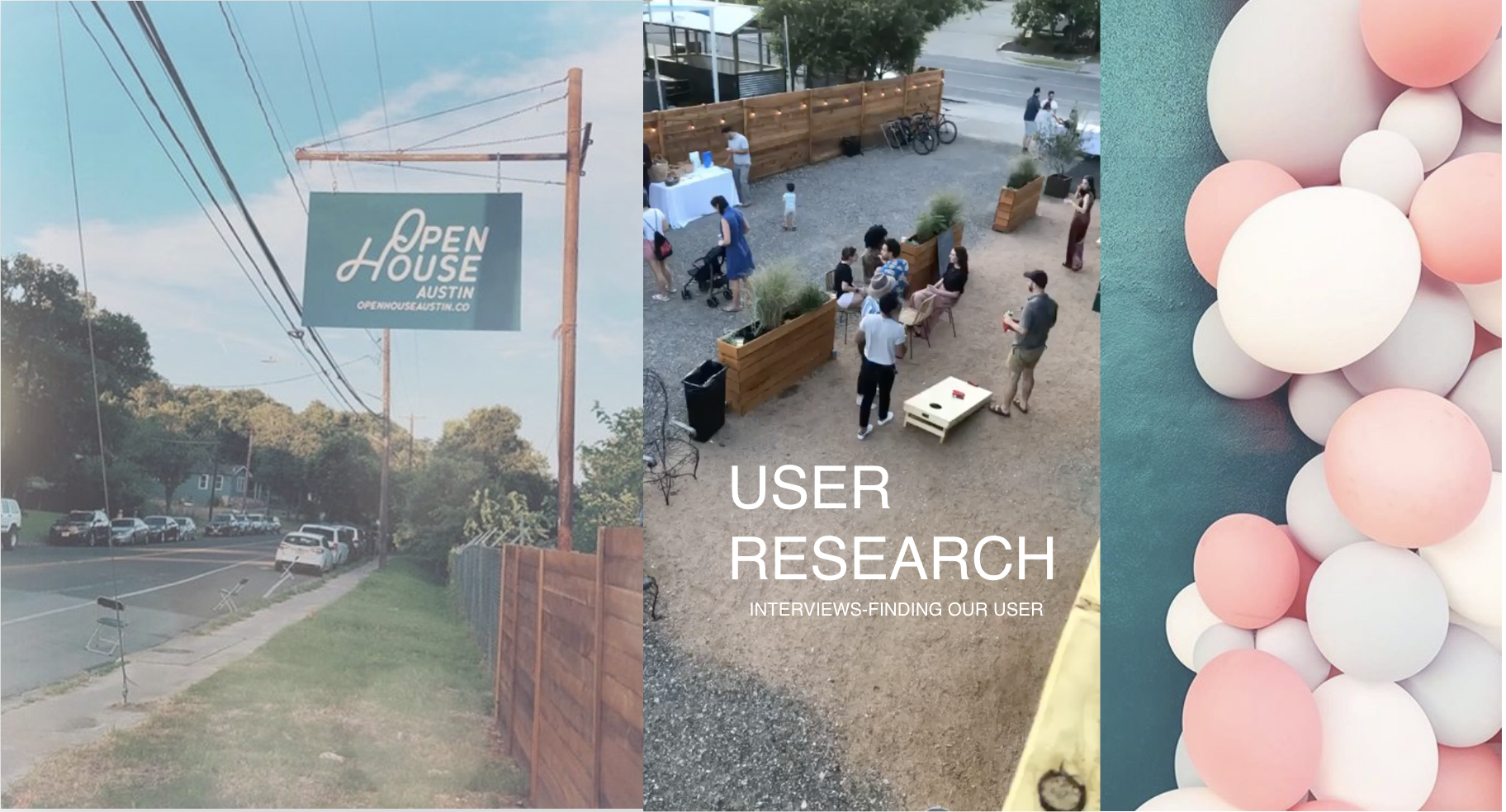
These interviews revealed homeowners are incredibly aware of the stress involved with having a mortgage, but it’s a process they are proud of.
We gathered these four insights:
People currently house share their apartments, whether that’s with family, friends or people they have met through their networks.
People are nervous and feel the impossibility of owning without having additional support.
People find roommates and homes online.
People value safety and security.
What about the existing website?
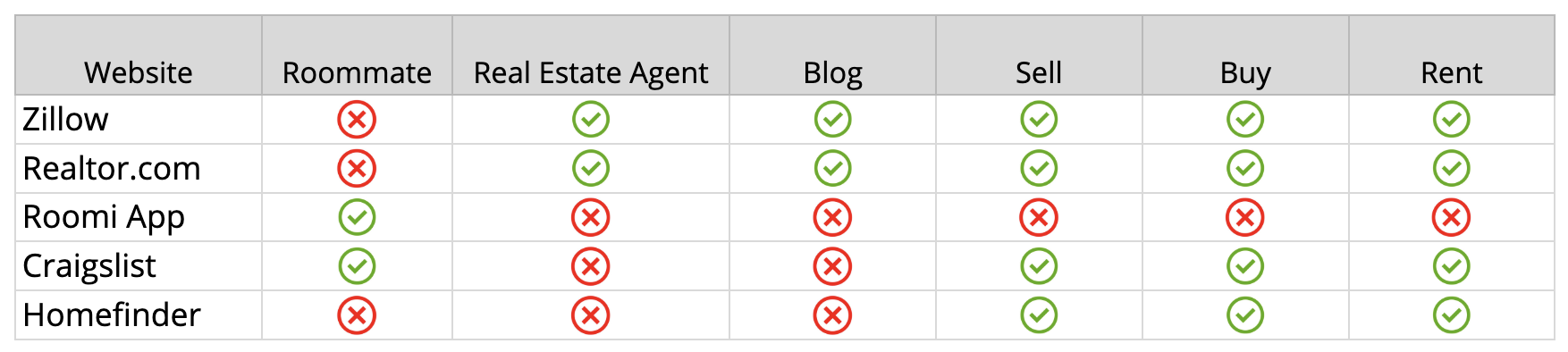
We learned of five companies that our users are currently using to find roommates. From performing a heuristics and competitive analysis, we arrived to these conclusions:
Apps currently offering roommate finding or house sharing services, are not catered to young home-owners and/or people looking for a like-minded relationship.
Most websites don’t offer home finding and house sharing in the same platform.
PHASE 02: DEFINE & IDEATE
Honing In On a Solution
We understood the importance of creating a simple, intuitive approach for users to find roommates but it was also critical to facilitate a like-minded connection. The arrived to this question:
How will we connect the best-suited roommate with the most optimal living situation?
We used the learnings from our interviews and research and distilled our information into our persona, Andi who helped us understand and emphasize with our user’s needs. We then explored her HomeSharing journey.
From here we were able to refine our problem and solution statements. We arrived at three objectives to answer our question.
Safety, building trust with the user
Connect users with the same interests and long-term goals
Allow users to negotiate their own terms
Andi’s journey with Homesharing.
Crafting Solutions
From here, we started to prioritize our needs for website features. We determined the most important features would include:
Roommate matching. Users will enter their preferences for lifestyle, personality and needs. These will be compared and matched, a list of potential roommates will be generated for the user to browse.
Chat. Users will be able to talk and negotiate their own terms of a contract with their potential matches.
ID-verification. Users will be required to be ID-verified before completing their roommate profile.
Sketches from our team design studio.

PHASE 03 & 04: DESIGN & PROTOTYPE
What does this look like?
We first created a round of lo-fi wireframes to communicate our designs within the team. We iterated on that design and created a mid-fidelity prototype that we could then put through usability testing. The last step was incorporating our visual design to create the final mockup.
Wireframes used for user testing.
User Testing
The feedback we received could be categorized in two parts; one, functional features we quickly agreed with and two, structural changes that were beyond the scope for this project.
Two user insights that were from the later are below.
They didn’t want to create a personal profile before being able to browse the available roommates. This was originally intentional, to keep the system secure and safe for the users. We hoped this would increase trust with the roommate searchers. We need to test this perspective in the future.
The user was not confident that this product was for them. They asked, “Is this service for me if I am an introvert?” We interpreted this as, “What if I don’t want to interact with my housemate?” We hoped this was addressed in our questionnaire, but needs to be more explicit when signing up.
Visuals & Final Mock-up
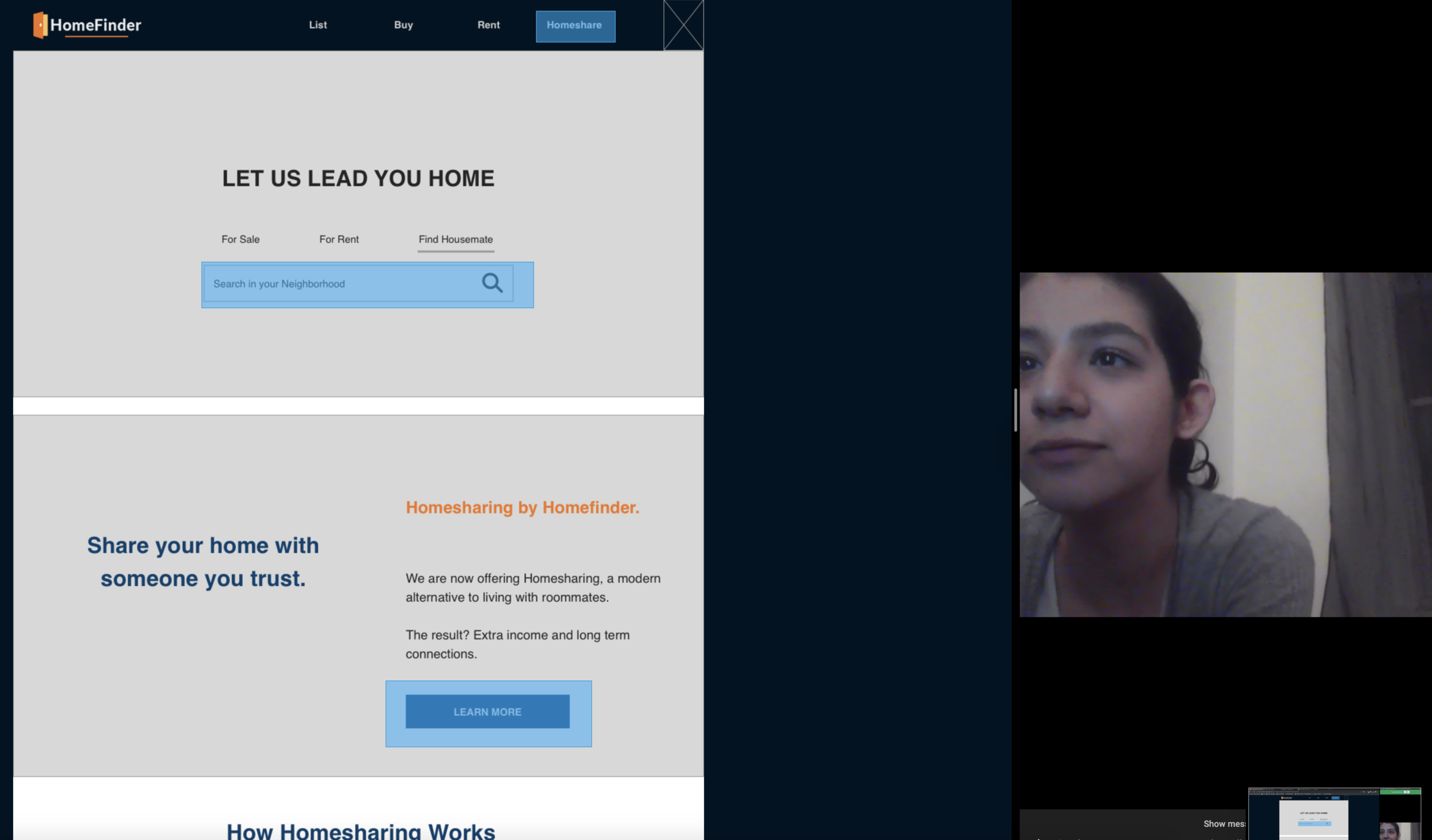
We created a symbol and design template that we used throughout the design. Since we were required to use the design system of the current website, our design includes their colors and typography. We did take some liberties in updating the home page to inform the user of the new product offering.
Our final product, after feedback from user testing.
THE OUTCOME
This is an MVP that was created for a group project during a UXDI Design Bootcamp at GA. The time scope limited the final product but the results are incredible considering the two-week timeline. Our next steps will be to pursue additional user testing, build out our chat feature and incorporate a document feature where users can find contract templates.
Lessons Learned
Teamwork improves the learning experience for everyone involved. We worked through each stage of the process together, with equal contribution. Although we had “leads” who were ultimately responsible for phases, we together worked through each stage efficiently and thoroughly. This allowed for a complete understanding, which was invaluable considering we were learning this process together in short timeframe.